- Automobile training equipment series
- Electrical and electronic teaching equipment
- Elevator training series
- Fitter training equipment
- Fluid mechanics experimental equipment
- Hydraulic and pneumatic test bench
- Mechanical teaching equipment
- Robotic automation and mechatronics series
- Welding training equipment

I. System Features
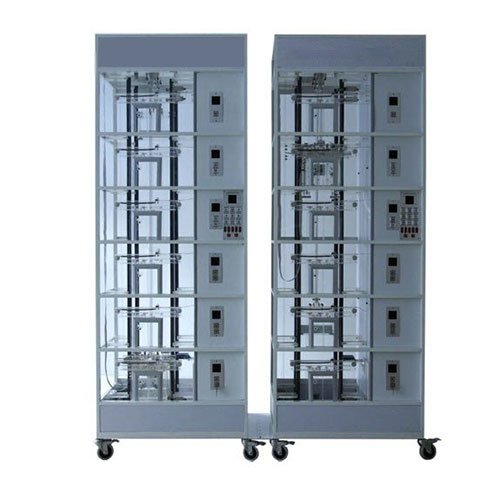
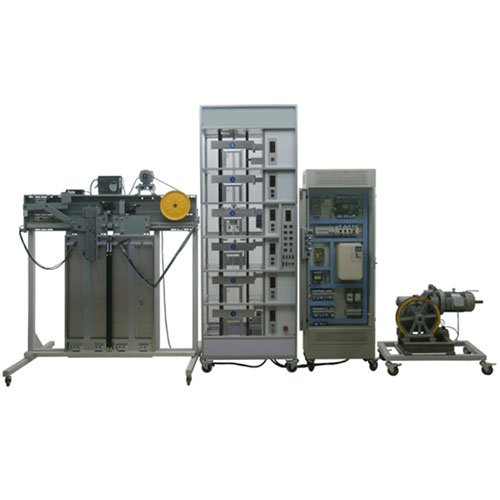
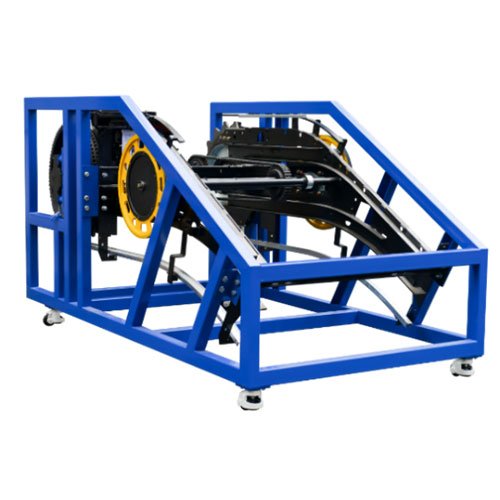
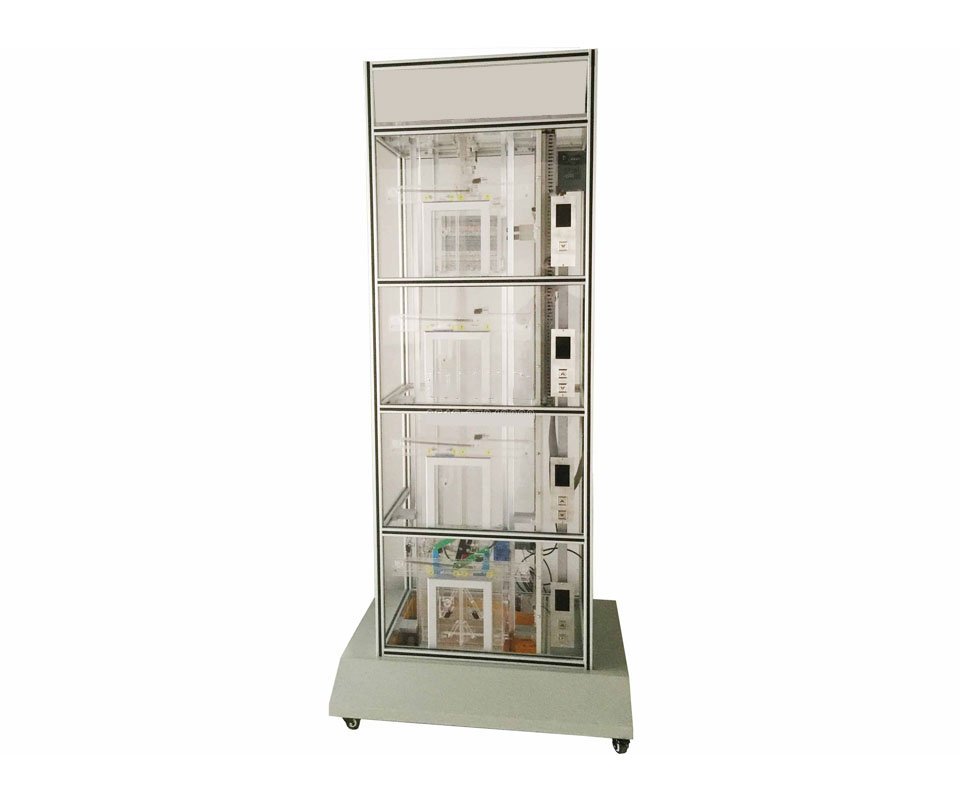
The transparent elevator training device is developed to meet the requirements of mechatronics teaching. It integrates PLC, frequency converter adjustment, sensor detection, position control, complex switch quantity control, and timing logic control into a single teaching device. It can meet the practical training needs of courses and is suitable for students in vocational colleges, secondary vocational schools, and technical schools to conduct elevator maintenance and PLC training.
The transparent structure design makes the internal structure and operation of the elevator clearly visible. This allows students to intuitively and thoroughly understand and master the structure and operating principles of the elevator.
II. Technical Specifications
1. Input Power: Single-phase three-wire 220V±10% 50Hz
2. Operating Environment: Temperature -10℃~+40℃, Relative Humidity <85% (25℃), Altitude <4000m
3. Device Capacity: <1.5kVA
4. Overall Dimensions: 700mm×700mm×2300mm
III. Basic Structure
1. The multi-story elevator has six floors. 2. Machine Room: Includes traction machine, speed governor, limit switches, control cabinet, and mechanical floor selector, etc.
3. Hoistway: Includes guide rails, counterweight, buffers, speed governor wire rope tensioning device, traveling cable, etc.
4. Landing Door: Includes landing door, call button box, floor display device, etc.
5. Car: Includes car, safety gear, guide shoes, automatic door opener, control panel, car indicator lights, car lighting, etc.
IV. System Composition and Functions
1. PLC Main Unit and Inverter: Mitsubishi FX2N-64MR main unit with built-in 32-channel digital input/32-channel digital output, FR-D740 inverter, AC380V, 0.75kW;
2. Overspeed Safety Protection System: In the event of an accident, the car may overspeed or descend at high speed (e.g., wire rope breakage, car top pulley detachment, traction machine worm gear failure, excessively high motor descent speed, etc.). At this point, the speed governor will apply emergency braking, and through the safety cable and linkage mechanism, it will activate the safety clamp, locking the car onto the guide rails and preventing it from falling.
3. Car and Counterweight Spring Buffer Device
The buffer is a safety device at the elevator’s extreme positions. When the elevator malfunctions, causing the car or counterweight to bottom out or top out (due to limit switch protection failure), the car or counterweight impacts the spring buffer, which absorbs the elevator’s energy, thus safely slowing the car or counterweight until it stops.
4. Door Safety Contact Plate Protection Device
A movable safety contact plate is installed on the edge of the car door. When the door is closing, if the safety contact plate comes into contact with a passenger or obstacle, the linkage connected to the safety contact plate will trigger a microswitch mounted on the car door, causing the door to reopen and preventing an accident.
5. Door Operator Torque Safety Protection Device
The door operator uses a certain torque to simultaneously close the car door and the landing door. When an object or person becomes trapped in the door, the closing torque increases. This triggers a connected limit switch, automatically reopening the car and landing doors to prevent accidents.
6. Automatic Landing Door Closing Device: The opening and closing of the elevator landing doors are achieved through door blades mounted on the car door. Each landing door is equipped with a door lock. After the landing door closes, the mechanical lock hook engages, allowing the elevator to start operating.
7. Terminal Limit Switch Safety Protection System: Terminal limit switches are installed at the top and bottom of the elevator shaft. When the elevator malfunctions and the car overshoots or undershoots, the terminal limit switch activates, sending an alarm signal and cutting off the control circuit, stopping the car.
V. Implement the following practical training functions through programming:
1. Sensor detection
2. Basic use of frequency converter
3. Timer instructions
4. Mathematical operation instructions
5. High-speed counter
6. Automatic door opening and closing control of the elevator car
7. Elevator simulated operation call indication drive
8. Floor display
9. Door operator torque safety protection
10. Hall door safety control
11. Elevator terminal switch protection
12. Elevator lifting and deceleration control
13. Positioning using photoelectric encoders