- Automobile training equipment series
- Electrical and electronic teaching equipment
- Elevator training series
- Fitter training equipment
- Fluid mechanics experimental equipment
- Hydraulic and pneumatic test bench
- Mechanical teaching equipment
- Robotic automation and mechatronics series
- Welding training equipment
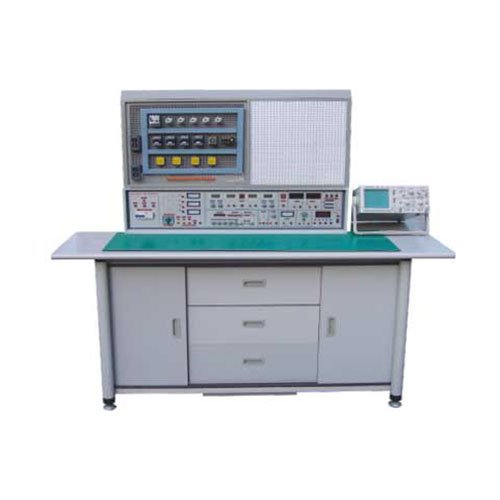
I. Overview:
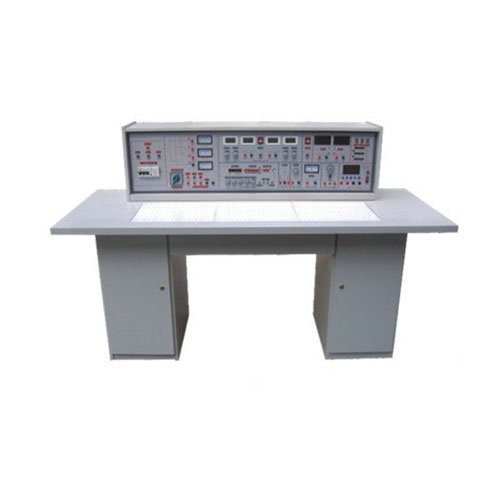
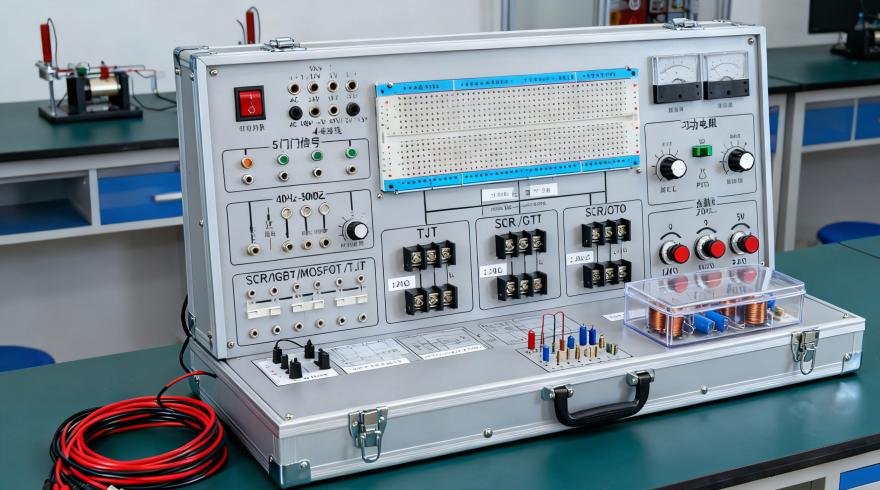
This device organically combines electrical engineering, analog electronics, and digital electronics experiments with skills training and assessment, achieving resource sharing and multi-purpose use of a single room. It reduces the need for instructors and infrastructure investment, resulting in significant economic benefits. Compared to the DBL-755 series, it features significant improvements in experimental platform technology and the depth and breadth of experimental content. Experiments include courses such as electrical engineering, electrical principles, analog electronics, and digital electronics, and can be used to conduct experiments on AC/DC circuits, oscillation circuits, magnetic field circuits, operational amplifiers, rectifier circuits, AC/DC amplifier circuits, and digital logic circuits. The experimental section adopts advanced German vocational education methods: utilizing a nine-hole universal experimental board and discrete transparent component boxes for flexible combination experiments. Components are reusable, making experiments convenient and fostering strong hands-on skills.
This analog and digital electronics skills training program reforms the traditional experimental and practical teaching model. Through basic operational skills and the creation and debugging of over thirty types of practical new circuits, students master the production and debugging of electronic products, learn to read circuit schematics and PCB diagrams, become familiar with the selection and testing of common electronic components, and master soldering and circuit assembly skills (the equipment includes over thirty sets of specially designed training circuit boards and corresponding components). Students are also able to handle problems encountered during installation and debugging. The training circuits cover switching, audio, signal generation, counting, decoding, display, measurement, and control.
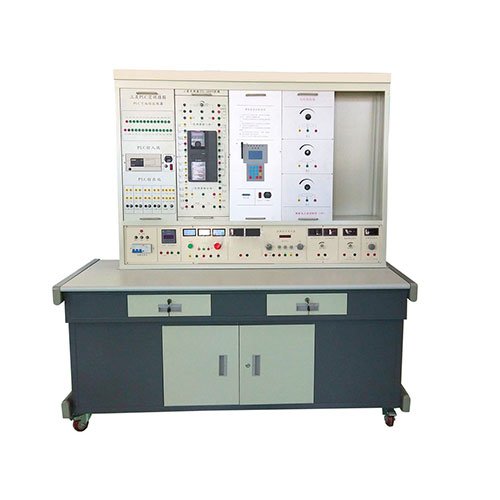
Electrical training assessments are conducted on the perforated board on the left side of the assessment platform. Through systematic training in safe electricity use, the use of common tools and instruments, basic electrical skills, motor installation, maintenance and troubleshooting, installation, debugging and repair of basic motor control circuits, and fault analysis and handling of common production machinery electrical control circuits, students can achieve at least an intermediate level in labor and social security vocational skills assessment. This series of equipment is scientific, demonstrative, practical, and engaging, making it an ideal product for the construction or renovation of laboratories in higher education institutions, vocational schools, and various training institutions.
II. Features:
1. It can complete electrical engineering, analog electronics, and digital electronics experiments as well as conduct practical training and assessments in these fields, significantly saving on laboratory space and management personnel, resulting in substantial economic benefits.
2. The component boxes in the experimental section are transparent, providing excellent visibility. The box covers and bodies utilize a scientifically designed snap-fit structure, facilitating maintenance and disassembly, and allowing for reusability. Component boxes can be arbitrarily connected to form experimental circuits on a nine-hole universal experimental board, offering flexible methods that enable students to apply their knowledge flexibly and master it quickly.
3. The practical training section is completed on a perforated board, making operation convenient and flexible. Component replacement is easy, closely resembling an industrial setting, and allowing for easy expansion of training functions or the development of new training projects.
4. The experimental training projects are abundant, and the device has complete functions. The digital electronic circuit experiments are equipped with universal integrated sockets, providing strong experimental expandability.
5. It is equipped with voltage-type and current-type leakage protection devices, and a single-chip microcomputer-based automatic monitoring device for overload or short circuits. In the event of an overload or short circuit, the power supply will be automatically cut off, and the power supply can only be restarted after the fault is cleared. Ensures equipment and operator safety.
6. The reference standard is 12 student workstations and 1 teacher workstation per room. Users can adjust the number of workstations according to the number of students. The teacher workstation can be used for demonstrations and can also control the power supply of the student workstations.
III. Technical Specifications:
1. Power Supply: Three-phase four-wire (or three-phase five-wire) ~380V ±5% 50Hz
2. Temperature: -10℃~40℃, relative humidity <85% (25℃)
3. Device Capacity: <1KVA
4. Weight: 200Kg
IV. Functional Configuration
1. Power Supply and Parameters:
1.1 Input Power: Three-phase four-wire power input controlled by start and stop buttons; indicator light illuminates during input.
1.2 Power Output: Equipped with an embedded fuse box, three-phase leakage circuit breaker, overload and short-circuit soft-cutoff protection devices, and three-level protection function.
Group A: Single-phase and three-phase adjustable AC power supply, providing continuously adjustable AC power from 0-430V, and simultaneously providing 0-250V single-phase adjustable power (equipped with a 1.5KVA three-phase autotransformer and three AC voltmeters to indicate the adjustable output voltage).
Group B: Low-voltage AC power supply with seven adjustable voltage levels from 3-24V, maximum output current 1.5A, indicated by an ammeter.
Group C: Low-voltage DC regulated power supply, voltage 5V, current 0.5A, indicated by an ammeter.
Group D: Dual-channel constant current regulated power supply, both output voltages are 0-30V, with built-in relays for automatic range switching. Multi-turn potentiometer for continuous adjustment, easy to use. Maximum output current is 1.5A, with preset current limiting protection function. Output has 0.5-level digital ammeter and voltmeter indication, voltage stability <10⁻², load stability <10⁻², ripple voltage <5mV.
Group E: Single-phase AC mains output, supplied to user equipment via a universal power strip.
2. Safety Protection: Equipped with voltage-type and current-type leakage current protectors, and a microcontroller automatically monitors for overload or short circuit, automatically cutting off the main power supply. Power can only be restarted after the reset button is pressed following fault resolution, ensuring operator and equipment safety.
3. Function Signal Generator
3.1 Waveforms: Sine wave, triangle wave, square wave, pulse wave, sawtooth wave, TTL square wave, rectangular wave.
3.2 Frequency Range: From 0.1Hz to 2MHz, divided into seven frequency levels.
3.3 Sine Wave Distortion: 10-30Hz <3%; 30Hz-100kHz ≤1%
3.4 Square Wave Response: Leading Edge/Left Edge ≤100ns (Open Circuit)
3.5 Maximum Output Amplitude (Open Circuit): f < 1MHz amplitude ≤15Vp-p; 1MHz < f ≤2MHz amplitude ≤11Vp-p
3.6 DC Bias (Open Circuit): ≤10V
3.7 Output Impedance Z: ZO = 50Ω ±5Ω
3.8 Duty Cycle: The rising and falling edges of pulse and sawtooth waves can be continuously varied, ranging from 10% to 90%.
3.9 Voltage-Controlled Oscillator (VCF): When the applied DC voltage changes from 0 to ±5V, the corresponding frequency change is greater than 100:1.
3.10 Output Attenuation: 20dB 40dB 60dB
4. Frequency Counter:
4.1 Frequency Measurement Range: 1Hz~100MHz
4.2 Gate Time: 0.01S, 0.1S, 1S, 10S
4.3 Input Impedance (AC Coupling): Resistive component approximately 500KΩ, parallel capacitor approximately 100pF.
5. Single Pulse: Outputs a pair of positive and negative pulses each time.
6. Audio Power Amplifier: Input audio voltage not less than 10mV, output power not less than 1W, adjustable volume, built-in speaker, used for amplification circuitry and signal tracing.
7. Seven-Segment Decoder: 6 sets of seven-segment decoders and corresponding decoded display digital tubes.
8. Intelligent Power and Power Factor Meter
Designed with a 24-bit dedicated DSP, a 16-bit high-precision AD converter, and a high-speed MPU unit, this meter features a human-machine interface control mode via keypad and digital display. The software adopts an RTOS design approach and is equipped with PC monitoring software to enhance analytical capabilities. Power measurement accuracy is 1.0 class, power factor measurement range is 0.3-1.0, voltage and current ranges are 450V and 5A, and it can automatically identify the load type (inductive load displays “L”, capacitive load displays “C”, pure resistance is not displayed). It can store 15 sets of measurement data for easy reference.
9. One True RMS Intelligent AC Ammeter
This meter, constructed with a single-chip microcomputer-controlled test circuit, features a fully digital display and full-range AC ammeter. It also features a human-machine interface control mode via keypad and digital display. Capable of measuring true RMS values of AC signals (20-20kHz), with a measurement range of 0-5A. Automatic range detection and switching, 0.5-level accuracy, and four-digit digital display. It can also store, query, and modify data (15 groups in total, power-off retention).
10. One intelligent DC digital ammeter
Designed using a high-performance AD converter from ECL and a high-speed MPU unit, it features a human-machine interface control mode via keypad and digital display. It has automatic and manual ranges, with a measurement range of 0-2000mA. Manual ranges are 20mA, 200mA, and 2000mA. Measurement accuracy is 0.5-level. It has data storage and query functions. It also features over-range alarm and indication functions.
V. Overall Room Composition and Equipment (Based on a reference standard: 1 teacher’s station and 12 student stations)
1. 12 experimental training screens, one for each student station. Made of double-layer matte powder-coated iron, with a perforated panel on the left and a nine-hole universal experimental board on the right. The lower part houses the power supply, signal, and control unit.
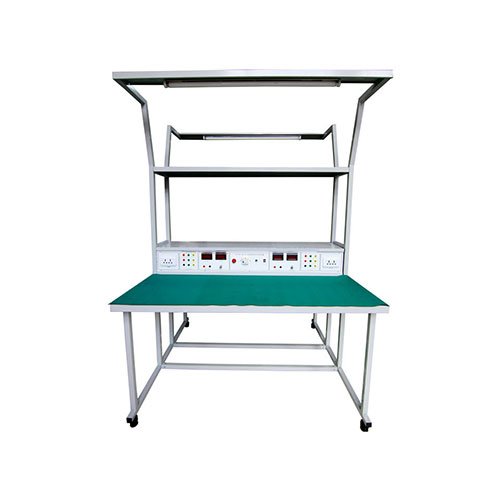
2. Operating tables: Aluminum-wood structure, with fireproof, waterproof, and wear-resistant high-density fiberboard tabletops. A total of 12 tables, one table with two seats. Each table is equipped with a rubber sheet for protection. The lower part of the table has a component storage cabinet for storing components.
3. 1 teacher’s station: Composed of an experimental training demonstration screen, a table, and a student power supply integrated controller. It can be used for experimental training demonstrations and explanations, and can also control the power supply of each student station to improve safety.
VI. Reference Experimental Training Projects
(I) Training Section:
A: Electrical Engineering Section
1. Use of a low-voltage tester
2. Operation of a fire extinguisher (teacher demonstration)
3. 4. Mastery of mouth-to-mouth resuscitation and chest compressions for first aid
5. Use and identification of common tools
6. Connection and insulation restoration of common wires
7. Soldering iron disassembly and soldering skills training
8. Electrical drawing reading training
9. Electrical wiring process
10. Installation and wiring of fluorescent lamp circuits
11. Installation of single-phase electricity meter direct wiring circuit
12. Installation of single-phase electricity meter wiring circuit via current transformer
13. Distribution board installation
14. Indoor wiring
15. Installation of indoor lighting circuits
16. Use and reading of multimeter selector switches
17. Measurement of AC voltage
18. Measurement of DC voltage and DC current
19. Installation of ammeters and voltmeters
20. Measurement of resistance
21. Use of megohmmeters, clamp meters, and grounding resistance testers
22. Measurement of single-phase power and power factor
23. Installation and Wiring of Three-Phase Four-Wire Active Energy Meter
23. Installation and Wiring of Three-Phase Four-Wire Active Energy Meter via Current Transformer
24. Disassembly and Assembly of Common Switches and Relays
25. Disassembly and Assembly of AC Contactors
26. Structural Observation and Testing of Common Starters
27. Fabrication of Small Transformers
28. Troubleshooting and Inspection of Small Transformers
29. Disassembly, Assembly, and Testing of Three-Phase Squirrel-Cage Motors
30. Operational Inspection of Three-Phase Squirrel-Cage Asynchronous Motors
31. Periodic Maintenance of Three-Phase Squirrel-Cage Asynchronous Motors
32. Fault Analysis of Three-Phase Squirrel-Cage Motors
33. Troubleshooting of Local Faults in Stator Windings
34. Disassembly and Assembly of Windings in Single-Phase Capacitor Motors
35. Faults and Troubleshooting of Single-Phase Capacitor Motors
36. Installation and Maintenance Training of Manual Forward Rotation Control Circuits
37. Contactor Jogging Forward Rotation Control
38. Forward Rotation Control with Self-Locking Function
39. 40. Forward and Reverse Control with Overload Protection
41. Forward and Reverse Control Circuit with Contactor Interlock
42. Forward and Reverse Control Circuit with Push-Button Interlock
43. Control Circuit with Combined Push-Button and Contactor Interlock
44. Y-Δ Reduced Voltage Control with Push-Button Control
45. Interlock Control between Spindle and Feed Motor of X62-W Milling Machine
46. Y-Δ Reduced Voltage Starting Control with Time Relay Control
47. Simulated Installation of Control Circuit for C620-1 Lathe
48. DC Motor Disassembly and Assembly Training (Teacher Demonstration)
1. DC Motor Repair Training (Teacher Demonstration)
1. Use of Common Instruments and Meters
2. Identification and Testing of Common Electronic Components
3. Soldering Iron Disassembly and Assembly and Electronic Soldering Skills Training
4. Printed Circuit Board Fabrication
5. Fabrication of Three-Terminal Integrated Regulated DC Power Supply
6. Fabrication of Series-Type DC Regulated Power Supply
7. Assembly and Testing of Low-Frequency Signal Voltage Amplifier
8. Construction and Testing of Signal Amplifier Circuit with Negative Feedback
9. Soldering and Debugging of Wien Bridge Oscillator
10. Construction and Testing of Battery Voltage Monitoring Circuit
11. Construction of Electronic Hypnotist Circuit
12. Practical Training in the Construction of Simulated “Cicada” Electronic Circuit
13. Construction and Training of Practical Sound-Controlled and Light-Controlled Energy-Saving Lighting
14. Practical Training in the Construction of Electronic Mosquito Repellent Circuit
15. Eye Protection Timer Circuit
16. Construction and Training of Voice Alarm Speaker
17. Construction and Testing of Logic Tester
18. Construction and Testing of Positive and Negative Pulse Signals
19. Construction of Quiz Buzzer
20. Construction of Water Level Alarm Circuit
21. Construction of Mini Flashing Colored Light
22. Light-Controlled Musical Doorbell
23. Construction of Practical Simulated Natural Wind Controller
24. Table lamp dimming circuit
25. Practical CMOS touch key circuit
26. Making an automatic charger
27. Assembly and debugging of a semiconductor radio
28. Assembly and debugging of a hearing aid
29. Assembly and debugging of sound and light controlled corridor lights
30. Assembly and debugging of a fire-fighting robot
B. Analog and digital circuit experiments:
(1) Analog experiments
1. Forward and reverse characteristics of diodes
2. Input and output characteristics of transistors
3. Common-emitter single-transistor amplifier
4. Two-stage RC-coupled amplifier circuit
5. The effect of negative feedback on amplifier performance
6. Field-effect transistor amplifier
7. Differential amplifier circuit
8. Operational amplifier performance testing
9. Basic applications of integrated operational amplifiers
(Various analog operational circuits)
10. Nonlinear Applications of Integrated Operational Amplifiers
(Multiple Waveform Generators), ;, ;,
11. Transformer-Coupled Push-Pull Power Amplifier
12. 0TL Power Amplifier
13. Integrated Power Amplifier
14. Single-Phase Bridge Rectifier Circuit
15. Series-Type Transistor DC Regulated Power Supply
(Design Experiment)
16. Integrated DC Regulated Power Supply
17. Unijunction Transistor Characteristics
18. Unijunction Transistor Trigger Circuit
19. Simple Thyristor Test
20. Thyristor Controlled Rectifier Circuit
Using the above 20 experimental components, the following experimental items can also be completed:
(2) Digital Part Experiments
1. Voltage Negative Feedback Bias Circuit
2. Voltage Divider Current Negative Feedback Bias Circuit
3. Stabilizing the Operating Point with Diodes
4. Common-Base Amplifier Circuit
5. Common-Collector Amplifier Circuit
6. Common-Source Basic Amplifier Circuit
7. 8. Common-drain MOSFET circuit
9. Common-gate MOSFET circuit
10. Single-transistor RC amplifier circuit
11. Transformer-coupled amplifier circuit
12. Class A power amplifier circuit
13. Series current negative feedback circuit
13. Series Voltage Negative Feedback Circuit
14. Parallel Voltage Negative Feedback Circuit
15. Parallel Current Negative Feedback Circuit
16. Common-Base Common-Emitter Amplifier Circuit
17. Bootstrap Emitter Follower Circuit
18. NPN-PNP Direct-Coupled Amplifier Circuit
19. Eliminating Self-Excited Oscillation with Negative Feedback
20. Transistor Switching Function
21. Transformer Feedback Oscillator Circuit
22. Capacitor Three-Point Oscillator Circuit
23. Inductor Three-Point Oscillator Circuit
24. Basic Forms of Differential Amplifier Circuits
25. Long-Tail Differential Amplifier Circuit
26. Dual-Power Long-Tail Differential Amplifier Circuit
27. Operational Amplifier Used for AC Proportional Amplification
28. Inverting Input Protection Measures
29. Non-Inverting Input Protection Measures
30. Power Supply Polarity Incorrect Connection Protection
31. RC High-Pass Circuit
32. Using Transistors to Protect Devices
33. Differential Input Operation Circuit
34. Fast Integrator Circuit
35. Analog First-Order Differential Equation Circuit
36. Analog Second-Order Differential Equation Circuit
37. Basic Logarithmic Operation Circuit
38. Practical Differentiator Circuit
39. Basic Anti-Static Amplifier Circuit
40. Simple Zero-Crossing Comparator Circuit
41. Circuit Using a Diode as the Upper Limit Detector Amplitude Selection Circuit
42. Lower Limit Amplitude Selection Circuit
43. Low-Pass Filter Circuit with RC Passive Network
44. First-Order Low-Pass Filter Circuit with Non-Inverting Input
45. First-Order Low-Pass Filter Circuit with Inverting Input
46. Simple Second-Order RC Filter Circuit
47. Typical Second-Order RC Active Low-Pass Filter Circuit
48. Typical Second-Order High-Pass Active Filter Circuit
49. Basic Band-Pass Filter Circuit
50. Typical Band-Pass Filter Circuit
51. Rectangular Wave Oscillator Circuit
52. 53. Adjustable Width Rectangular Wave Generator
54. Adjustable Amplitude and Frequency Sawtooth Wave Generator
55. Single-Phase Half-Wave Rectifier Circuit
56. Single-Phase Full-Wave Rectifier Circuit
57. Capacitor Filter Circuit
58. Capacitor Filter with Resistive Load
59. RC Filter Circuit
60. Basic LC Filter Circuit
61. Voltage Doubler Rectifier Circuit
62. Voltage Tripler Rectifier Circuit
63. Basic Voltage Regulator Circuit
64. Voltage Regulator Circuit with Amplification Stage
65. Single-Phase Half-Wave Thyristor Rectifier
66. Electronic Voltage Regulator Circuit
67. Electronic Hypnotist – Fun Experiment 1
68. Electronic Doorbell Circuit – Fun Experiment 2
69. Electronic Alarm Circuit – Fun Experiment 3
1. Parameter Testing of TTL Integrated Logic Gates
2. Parameter Testing of CMOS Logic Gates
3. Applications of TTL Integrated Open-Circuit Gates and Tri-State Output Gates
4. AND, NOT, OR, NAND Gate Circuit Experiments
5. Half-Adder Circuit Experiments
6. Full Adder Circuit Experiments
7. RS Flip-Flop Experiments
8. D Flip-Flop Experiments
9. JK Flip-Flop Experiments
10. T Flip-Flop Experiments
11. Converting JK Flip-Flop to D Flip-Flop
12. Converting D Flip-Flop to JK Flip-Flop
13. Counter Experiments
14. MSI Shift Registers and Their Applications
15. Decoders and Their Conversion Methods
16. MSI Data Selectors and Logic Design
17. Differential Monostable Circuits
18. Ring Multivibrators
19. Constructing Encoders, Distributors, and Selectors Using Gate Circuits
20. Combinational Circuit Design Part 1: Encoding Conversion
21. Combinational Circuit Design Part 2: Display Circuits
22. Synchronous Sequential Circuit Design
23. Computer Sequential Circuit Design
24. Integrated Timer Testing and Applications
25. CMOS Integrated A/D and D/A Conversion Circuit Experiment
26. Diode NOT Gate and NOR Gate Circuit
27. Transistor NOT Gate, NAND Gate, and NOR Gate Circuit
28. Asynchronous Decimal Subtractor Counter
29. Asynchronous Decimal Adder Counter
30. Comprehensive Ability Training Experiment 1: Electronic Stopwatch
Basic Applications of Integrated Operational Amplifiers
(Various Analog Operational Circuits)
10. Nonlinear Applications of Integrated Operational Amplifiers
(Various Waveform Generators)
11. Transformer-Coupled Push-Pull Power Amplifier
12. OTL Power Amplifier
13. Integrated Power Amplifier
14. Single-Phase Bridge Rectifier Circuit
15. Series Transistor DC Regulated Power Supply
(Design Experiment)
16. Integrated DC Regulated Power Supply
17. Unijunction Transistor Characteristics
18. Unijunction Transistor Trigger Circuit
19. Simple Thyristor Test
20. Thyristor Controlled Rectifier Circuit
Using the above 20 experimental components, the following experimental items can also be completed:
(2) Digital Part Experiments
1. Voltage Negative Feedback Bias Circuit
2. Voltage Divider Current Negative Feedback Bias Circuit
3. Stabilizing the Operating Point with Diodes
4. Common Base Amplifier Circuit
5. Common Collector Amplifier Circuit
6. Common Source Basic Amplifier Circuit
7. Field Effect Transistor Common Drain Circuit
8. Field Effect Transistor Common Gate Circuit
9. Single Transistor RC Amplifier Circuit
10. Transformer Coupled Amplifier Circuit
11. Class A Power Amplifier Circuit
12. Series Current Negative Feedback Circuit
13. Series Voltage Negative Feedback Circuit
14. Parallel Voltage Negative Feedback Circuit
15. Parallel Current Negative Feedback Circuit
16. Common Base Common Emitter Amplifier Circuit
17. Bootstrap Emitter Output Circuit
18. NPN-PNP Direct-Coupled Amplifier Circuit
19. Eliminating Self-Oscillation with Negative Feedback
20. Transistor Switching Function
21. Transformer Feedback Oscillator Circuit
22. Capacitor Three-Point Oscillator Circuit
23. Inductor Three-Point Oscillator Circuit
24. Basic Forms of Differential Amplifier Circuits
25. Long-Tail Differential Amplifier Circuit
26. Dual-Power Long-Tail Differential Amplifier Circuit
27. Operational Amplifier Used for AC Proportional Amplification
28. Inverting Input Protection Measures
29. Non-Inverting Input Protection Measures
30. Protection Against Incorrect Power Supply Polarity
31. RC High-Pass Circuit
32. Using Transistors to Protect Devices
33. Differential Input Operational Circuit
34. Fast Integrator Circuit
35. Analog First-Order Differential Equation Circuit
36. Analog Second-Order Differential Equation Circuit
37. Basic Logarithmic Operational Circuit
38. Practical Differentiating Circuits
39. Basic Anti-digital Amplifier Circuit
40. Simple Zero-Crossing Comparator Circuit
41. Amplitude Selection Circuit Using a Diode as the Upper Limit Detector
42. Lower Limit Amplitude Selection Circuit
43. Low-Pass Filter Circuit with RC Passive Network
44. First-Order Low-Pass Filter Circuit with Non-Inverting Input
45. First-Order Low-Pass Filter Circuit with Inverting Input
46. Simple Second-Order RC Filter Circuit
47. Typical Second-Order RC Active Low-Pass Filter Circuit
48. Typical Second-Order High-Pass Active Filter Circuit
49. Basic Band-Pass Filter Circuit
50. Typical Band-Pass Filter Circuit
51. Rectangular Wave Oscillator Circuit
52. Adjustable Width Rectangular Wave Generator
53. Adjustable Amplitude and Frequency Sawtooth Wave Generator
54. Single-Phase Half-Wave Rectifier Circuit
55. Single-Phase Full-Wave Rectifier Circuit
56. Capacitor Filter Circuit
57. 58. Capacitor Filter with Resistive Load
59. RC Filter Circuit
60. Basic LC Filter Circuit
61. Voltage Doubler Rectifier Circuit
62. Voltage Tripler Rectifier Circuit
63. Basic Voltage Regulator Circuit
64. Voltage Regulator Circuit with Amplification Stage
65. Single-Phase Half-Wave Thyristor Rectifier
66. Electronic Voltage Regulator Circuit
67. Electronic Hypnotist – Fun Experiment 1
68. Electronic Doorbell Circuit – Fun Experiment 2
69. Electronic Alarm Circuit – Fun Experiment 3
1. Parameter Testing of TTL Integrated Logic Gates
2. Parameter Testing of CMOS Logic Gates
3. Application of TTL Integrated Open-Electrode Gates and Tri-State Output Gates
4. AND, NOT, OR, NAND Gate Circuit Experiments
5. Half Adder Circuit Experiment
6. Full Adder Circuit Experiment
7. RS Flip-Flop Experiment
8. D Flip-Flop Experiment
9. JK Flip-Flop Experiment
10. T Flip-Flop Experiment
11. Converting a JK Flip-Flop to a D Flip-Flop
12. Converting a D Flip-Flop to a JK Flip-Flop
13. Counter Experiment
14. MSI Shift Register and Its Applications
15. Decoder and Its Conversion Methods
16. MSI Data Selector and Logic Design
17. Differential Monostable Circuit
18. Ring Multivibrator
19. Encoder Distributor and Selector Constructed Using Gate Circuits
20. Combinational Circuit Design Part 1: Encoding Conversion
21. Combinational Circuit Design Part 2: Display Circuit
22. Synchronous Sequential Circuit Design
23. Computer Sequential Circuit Design
24. Integrated Timer Testing and Applications
25. CMOS Integrated A/D and D/A Conversion Circuit Experiment
26. Diode NOT Gate and NOR Gate Circuits
27. Transistor NOT Gate, NAND Gate, and NOR Gate Circuits
28. 29. Asynchronous Decimal Subtractor Counter
30. Asynchronous Decimal Adder Counter
31. Comprehensive Ability Training Experiment 1: Electronic Stopwatch